Education
Augmented Reality in Neurosurgery: Transforming Precision and Patient Outcomes
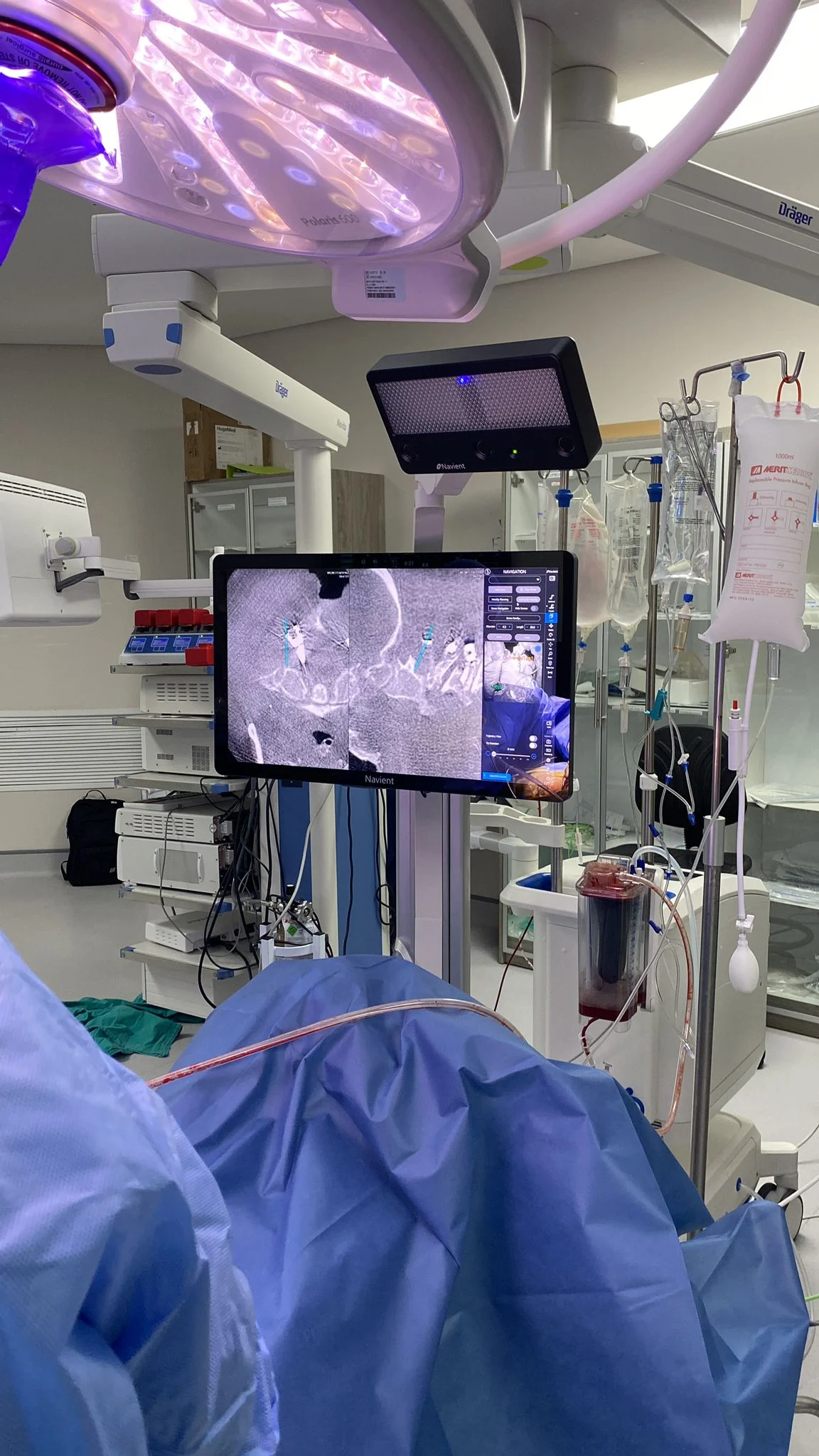
Augmented Reality (AR) is transforming the landscape of neurosurgery, offering unprecedented precision and enhanced visualization that directly improves patient outcomes. As we advance into 2025, the integration of AR technology with navigation systems like NAVIENT is revolutionizing how surgeons' approach complex procedures.
The Current State of AR in Neurosurgery
Modern neurosurgical procedures demand extraordinary precision. With the human brain’s complex anatomy and critical structures measured in millimeters, traditional navigation methods, while effective, are being enhanced by AR technology. By overlaying digital information directly onto the surgeon’s field of view, AR provides real-time, context-aware guidance during critical interventions.
“AR technology allows us to see beyond the surface, providing real-time guidance that transforms how we navigate complex anatomical structures.”
— Dr. Sarah Mitchell, Lead Neurosurgeon, Cape Town Medical Center
Key Benefits of AR-Enhanced Navigation
Enhanced Precision
Sub-millimeter AR overlays help surgeons navigate critical structures with confidence. NAVIENT’s AR integration achieves less than 1mm accuracy in real-world surgical conditions.
Improved Visualization
Tumor boundaries, vascular structures, and functional brain areas can be visualized in real-time—reducing the need to reference separate monitors during surgery.
Reduced Operating Time
AR-assisted procedures shorten average operating times by 15–20%, minimizing anesthesia exposure and surgical risks.
Enhanced Safety
Real-time alerts and boundary visualization reduce the risk of complications by helping surgeons avoid critical structures.
NAVIENT AR Integration: A Game-Changer
The NAVIENT system represents the next evolution in surgical navigation, combining advanced imaging with intuitive AR tools.
Key Features:
Real-Time Overlay Technology – Instant visualization of anatomical structures with advanced algorithms.
Multi-Modal Integration – Combines MRI, CT, and intraoperative imaging seamlessly.
Intuitive Interface – Gesture-based controls ensure surgeons maintain sterility.
Customizable Views – Adjustable opacity, structure highlighting, and imaging modality toggles.
Clinical Applications and Success Stories
AR-enhanced navigation is already proving invaluable across several neurosurgical domains:
Tumor Resection
Achieves higher resection rates (94% with AR vs. 87% with traditional methods) while preserving eloquent brain areas.
Functional Neurosurgery
Precise electrode placement for deep brain stimulation benefits from real-time visualization of target nuclei and surrounding structures.
Pediatric Neurosurgery
Non-invasive AR guidance minimizes radiation exposure while maintaining precision in delicate pediatric cases.
The Road Ahead: Future Developments
The future of AR in neurosurgery is brighter than ever. Innovations on the horizon include:
AI-Powered Predictions – Personalized surgical planning based on anatomy and historical outcomes.
Haptic Feedback Integration – Combining tactile feedback with AR visualization for enhanced control.
Remote Surgical Guidance – Expert surgeons guiding colleagues worldwide in real-time via AR.
Implementing AR in Your Practice
For surgical teams exploring AR adoption, the NAVIENT system provides a streamlined, supportive path:
✓ Comprehensive training programs (2–3 days)
✓ 24/7 technical support during integration
✓ Gradual implementation protocols
✓ Ongoing education and software updates
Conclusion
AR technology in neurosurgery is no longer a futuristic concept—it’s here today, actively transforming surgical precision and patient outcomes. The NAVIENT AR system is at the forefront of this revolution, offering surgeons powerful, intuitive tools to navigate the complexities of the human brain.
As this technology evolves, our commitment remains clear: to empower surgical teams with comprehensive training, continuous support, and cutting-edge innovation.
👉 The future of neurosurgery is enhanced by AR—and that future is happening now.
The Current State of AR in Neurosurgery
Modern neurosurgical procedures demand extraordinary precision. With the human brain’s complex anatomy and critical structures measured in millimeters, traditional navigation methods, while effective, are being enhanced by AR technology. By overlaying digital information directly onto the surgeon’s field of view, AR provides real-time, context-aware guidance during critical interventions.
“AR technology allows us to see beyond the surface, providing real-time guidance that transforms how we navigate complex anatomical structures.”
— Dr. Sarah Mitchell, Lead Neurosurgeon, Cape Town Medical Center
Key Benefits of AR-Enhanced Navigation
Enhanced Precision
Sub-millimeter AR overlays help surgeons navigate critical structures with confidence. NAVIENT’s AR integration achieves less than 1mm accuracy in real-world surgical conditions.
Improved Visualization
Tumor boundaries, vascular structures, and functional brain areas can be visualized in real-time—reducing the need to reference separate monitors during surgery.
Reduced Operating Time
AR-assisted procedures shorten average operating times by 15–20%, minimizing anesthesia exposure and surgical risks.
Enhanced Safety
Real-time alerts and boundary visualization reduce the risk of complications by helping surgeons avoid critical structures.
NAVIENT AR Integration: A Game-Changer
The NAVIENT system represents the next evolution in surgical navigation, combining advanced imaging with intuitive AR tools.
Key Features:
Real-Time Overlay Technology – Instant visualization of anatomical structures with advanced algorithms.
Multi-Modal Integration – Combines MRI, CT, and intraoperative imaging seamlessly.
Intuitive Interface – Gesture-based controls ensure surgeons maintain sterility.
Customizable Views – Adjustable opacity, structure highlighting, and imaging modality toggles.
Clinical Applications and Success Stories
AR-enhanced navigation is already proving invaluable across several neurosurgical domains:
Tumor Resection
Achieves higher resection rates (94% with AR vs. 87% with traditional methods) while preserving eloquent brain areas.
Functional Neurosurgery
Precise electrode placement for deep brain stimulation benefits from real-time visualization of target nuclei and surrounding structures.
Pediatric Neurosurgery
Non-invasive AR guidance minimizes radiation exposure while maintaining precision in delicate pediatric cases.
The Road Ahead: Future Developments
The future of AR in neurosurgery is brighter than ever. Innovations on the horizon include:
AI-Powered Predictions – Personalized surgical planning based on anatomy and historical outcomes.
Haptic Feedback Integration – Combining tactile feedback with AR visualization for enhanced control.
Remote Surgical Guidance – Expert surgeons guiding colleagues worldwide in real-time via AR.
Implementing AR in Your Practice
For surgical teams exploring AR adoption, the NAVIENT system provides a streamlined, supportive path:
✓ Comprehensive training programs (2–3 days)
✓ 24/7 technical support during integration
✓ Gradual implementation protocols
✓ Ongoing education and software updates
Conclusion
AR technology in neurosurgery is no longer a futuristic concept—it’s here today, actively transforming surgical precision and patient outcomes. The NAVIENT AR system is at the forefront of this revolution, offering surgeons powerful, intuitive tools to navigate the complexities of the human brain.
As this technology evolves, our commitment remains clear: to empower surgical teams with comprehensive training, continuous support, and cutting-edge innovation.
👉 The future of neurosurgery is enhanced by AR—and that future is happening now.